
Your boat gets all the attention, but the trailer does the hard work. It gets dunked in the lake, sits in the Texas sun and then gets pulled down I-45 at highway speed. A trailer that sat all winter deserves a quick check before the first trip.
Tires: look at age, not just tread
Trailer tires usually age out before they wear out. Check for:
- Cracks in the sidewall or between the treads (dry rot)
- Bulges or flat spots
- The pressure printed on the sidewall. Trailer tires are often run at higher pressure than car tires.
- A spare that holds air and fits
There's a four-digit date code on the sidewall (week and year). Old tires can fail even with good tread.
Wheel bearings: the classic roadside failure
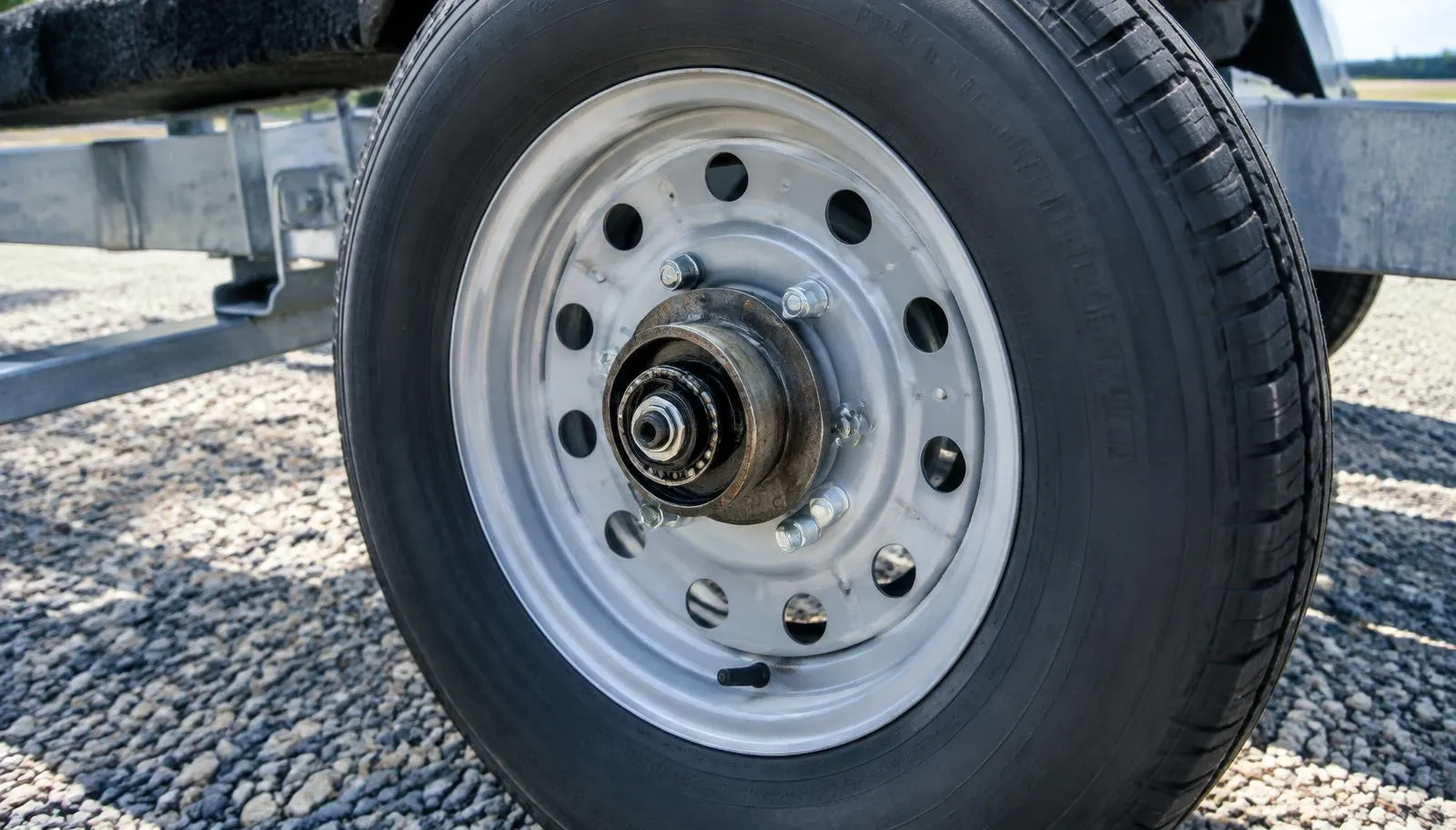
Bearings get dunked in water at every launch. If water gets past the seals, the grease breaks down and the bearing can overheat.
- Jack each wheel up and spin it. It should spin smoothly and quietly.
- Grab the top and bottom of the tire and rock it. There shouldn't be play.
- After your first drive, carefully feel the hubs. One that's much hotter than the others needs attention before the next trip.
Lights: check them with a helper
Trailer lights fail all the time because of water and corrosion. Hook up to the truck and check the brake lights, turn signals, tail lights and side markers. Corroded plugs and broken grounds are the usual culprits. Texas law requires working tail, brake and turn lights on trailers.
Brakes
In Texas, a trailer with a gross weight over 4,500 pounds needs its own brakes. Surge brakes are common on boat trailers. Check the brake fluid in the actuator, look for rusted lines, and make sure the breakaway cable or chain is attached and in good shape.
Winch, strap and safety chains
- Look for frayed winch straps or rusted cable. Replace them before they snap at the ramp.
- Make sure the bow stop and roller are in good shape.
- Safety chains should cross under the tongue, and the hooks shouldn't be stretched open.
- The transom tie-down straps should be tight and not sun-rotted.
Bunks and rollers
Torn bunk carpet or seized rollers can scratch your hull and make loading harder. Check them while the boat is off the trailer, or at least look underneath with a flashlight.
Don't have a trailer at all?
Plenty of Lake Conroe boats live on a lift or in a slip with no trailer. When those boats need shop work, we have trailers to pull them out of the water and bring them in. Read about Boat Pickup & Haul-Out, or call (833) 754-5978.
Call (833) 754-5978 for a phone quote
Tell us what the boat is doing and where it is — we'll tell you what to expect.