A lot of "my boat won't start" calls in the spring come back to one thing: fuel that sat too long. Cars rarely have this problem because they burn through a tank in a week or two. A boat on Lake Conroe can sit on the same tank from October to April.
What ethanol does in a boat
Most pump gas in Texas contains up to 10% ethanol (E10). Ethanol is great at one thing that's bad for boats: it absorbs water. Boat fuel systems are vented to the outside air, and around a lake there's plenty of humidity. Over time the ethanol in your tank keeps picking up moisture.
Phase separation, in plain words
When the ethanol absorbs enough water, it can't hold it anymore. The water-ethanol mix separates out and sinks to the bottom of the tank, which is right where the fuel pickup is. What's left on top is weaker gas that's lost some of its octane. The engine then tries to run on a slug of water and alcohol, or on fuel that's lost its punch.
Warning signs
- Hard starting after the boat has sat for a while
- Rough idle, stalling when you shift into gear
- Engine bogs or hesitates when you throttle up
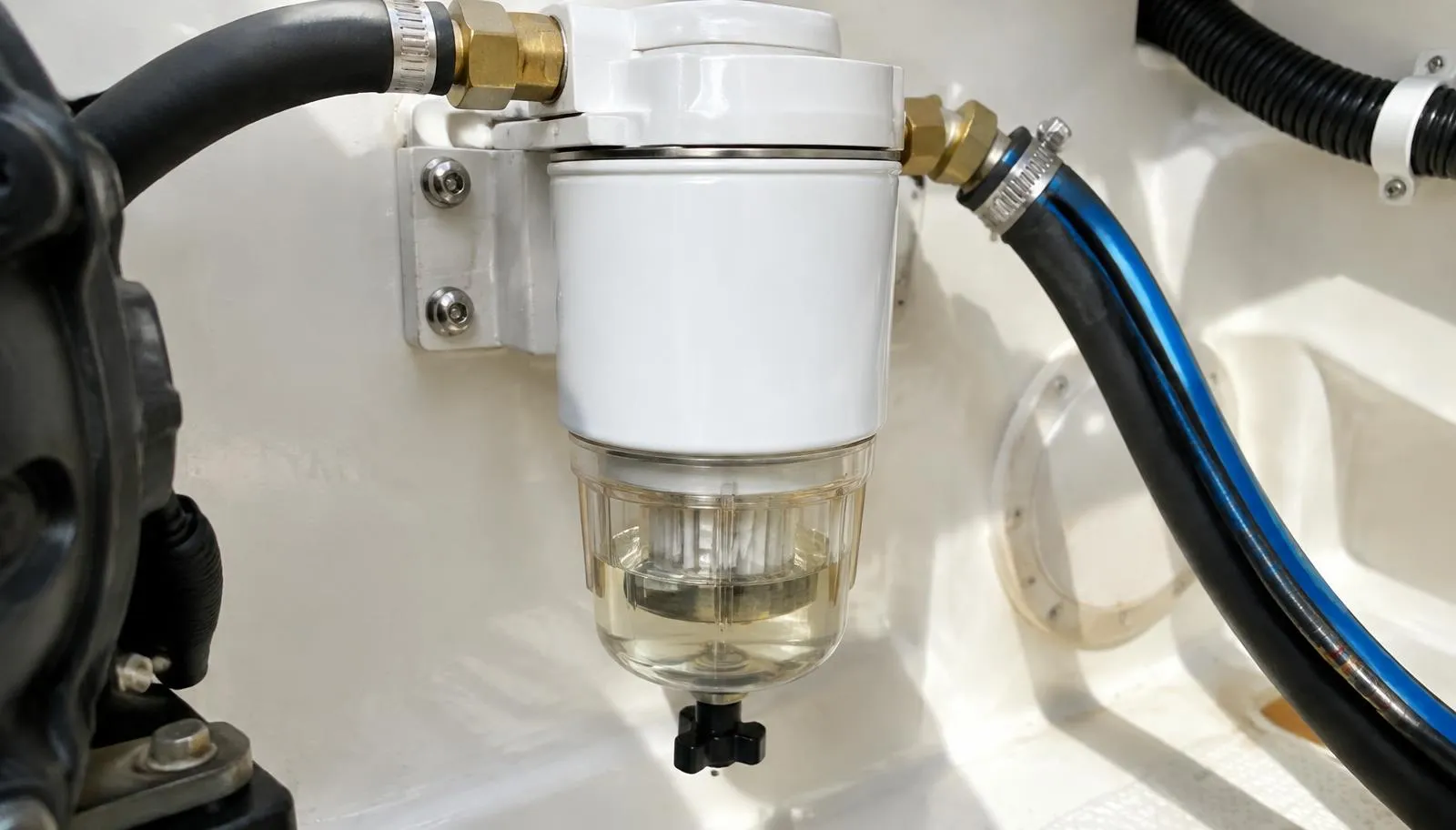
- Water or cloudy fuel in the water-separating filter bowl
- Gummy, varnish-like deposits in carburetors (on older engines)
If you're seeing these, don't just keep cranking. You can burn up a starter or pull bad fuel deeper into the system. Our Engine Diagnostics can tell you whether it's fuel, ignition or something else.
How to protect your fuel
- 1Use a marine fuel stabilizer every time you know the boat will sit more than a few weeks, not just in winter.
- 2Run the engine after adding it so treated fuel reaches the lines, filter and engine.
- 3Keep the tank mostly full during storage to limit the airspace where moist air collects.
- 4Change your water-separating fuel filter on schedule. It's cheap and catches water before the engine does.
- 5Buy fuel from busy stations so you're not getting gas that's already been sitting.
- 6Ethanol-free gas is available at some stations and marinas. If you can get it, many boaters prefer it for engines that sit.
Older boats need extra attention
Older boats with carburetors and older fuel lines tend to take ethanol the hardest. Some older hoses and tank materials weren't made for ethanol at all. We work on older boats when other shops won't, and fuel system cleanup on an engine that sat for years is a job we see often. Read more about Outboard Repair & Maintenance.
If your boat already sat on bad fuel
Don't panic. Usually the fix is draining the bad fuel, replacing filters, cleaning the fuel system and checking the components ethanol tends to damage. The earlier you catch it, the smaller the bill. Call (833) 754-5978, tell us what the engine is doing, and we'll give you a phone quote.
Call (833) 754-5978 for a phone quote
Tell us what the boat is doing and where it is — we'll tell you what to expect.